Bioavailability: why absorption is more important than what you eat
You can eat as healthily as you want or take the best supplements, but your body only benefits when it can actually absorb them. This concept is called bioavailability. It describes what portion of a nutrient actually enters your bloodstream and becomes usable for your cells. Or as it is often said:
"You are not what you eat, you are what you absorb."
Bioavailability determines how much effect food or supplements can ultimately have. Therefore, it's sensible not only to pay attention to what you consume, but especially to how much of it your body actually utilizes. This also plays a role in the choosing NMN supplements that support your NAD+ level. Who NMN supplements used as part of a healthy lifestyle therefore chooses the best form that is well absorbable.
What is bioavailability?
Bioavailability is about how much of a nutrient your body actually absorbs and how quickly that happens. It determines whether something just passes through your stomach or actually reaches the place where your body needs it.
In simple terms: it's not about what you eat or take, but about what ultimately appears in your bloodstream and can be used by your cells.
As a result, it can happen that two people take exactly the same supplement but notice something different. Their bodies do not absorb the same amount. Factors such as gut health, the timing of intake, what you eat with it, and even your stresslevel all play a role in how much your body actually utilizes.

Why bioavailability is important
Bioavailability determines how many nutrients your body actually utilizes. For example, you can eat a lot of broccoli or avocado, which naturally contain a small amount of NMN. That NMN can be converted to NAD+, a substance that helps your cells with recovery and energy. However, those amounts are small and not everything is absorbed equally well. This highlights how important absorption is. Even the best foods or supplements have little effect when your body does not process them efficiently.
Do you want NMN supplements use as part of a healthy lifestyle? Then choose a pure form that your body can absorb well.
How you can improve bioavailability yourself
You cannot fully control bioavailability, but you can support it. Timing, nutrition, and even the way you store supplements all affect how much your body actually absorbs. This is also described in an overview by Tru Niagen on the factors that influence absorption.¹
Bioavailability enhancers
-
The right time to take
Some vitamins work better at a specific time of day. Vitamin B12 is best taken in the morning. -
With or without food
Some nutrients are better absorbed when taken with food, such as iron or fat-soluble vitamins. Water-soluble vitamins, like vitamin C, work better on an empty stomach. -
Proper storage
Heat, light, and air can slowly break down supplements. By storing them cool, dry, and well-sealed, you maintain better quality. This has more impact on absorption than many people think.
Bioavailability detractors
There are also factors that can lower absorption:
-
alcohol and caffeine
These substances can reduce absorption in the intestines and sometimes even accelerate the excretion of nutrients. -
persistent stress
Stress disrupts digestion and hormone balance, causing the body to absorb nutrients less effectively. -
aging
With age, the body produces fewer digestive enzymes and stomach acid, which slows down absorption. -
digestive complaints
Issues such as an irritated intestine or reduced enzyme production cause nutrients to be broken down and absorbed less effectively. -
certain medications and over-the-counter drugs
Some substances can block absorption or change the way the body processes nutrients.
When these factors are present, your body may absorb fewer nutrients or lose them more quickly. Therefore, it is important to be mindful of your supplement routine.
The role of delivery systems (the form of supplements)
The form in which you take a supplement largely determines how well it is absorbed. In the same study by Tru Niagen, it is explained that the speed at which a supplement disintegrates, dissolves, or is recognized by the body greatly influences its bioavailability.¹ Some forms are available faster, others are more stable or easier for daily use.
Capsules
Capsules are the most commonly used form. Your body easily breaks down the outer layer, releasing the nutrients. However, absorption can vary per person, especially if you are sensitive to certain excipients. Therefore, it is wise to always check the label.
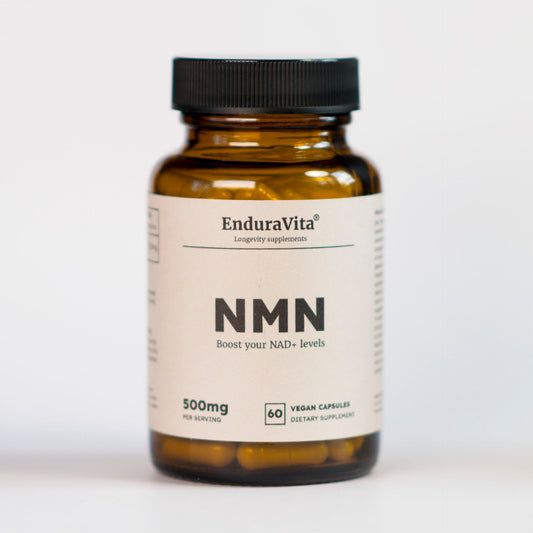
View our NMN capsules here:
Order NMN capsules
Softgels
Softgels contain a liquid filling that is often absorbed quickly and efficiently. They usually have high stability and a long shelf life. Due to the more complex production, they are often more expensive.
Powders
Powders do not have a coating that needs to be broken down first, making the nutrients directly available for absorption. This makes this form popular among people looking for quick and efficient absorption.
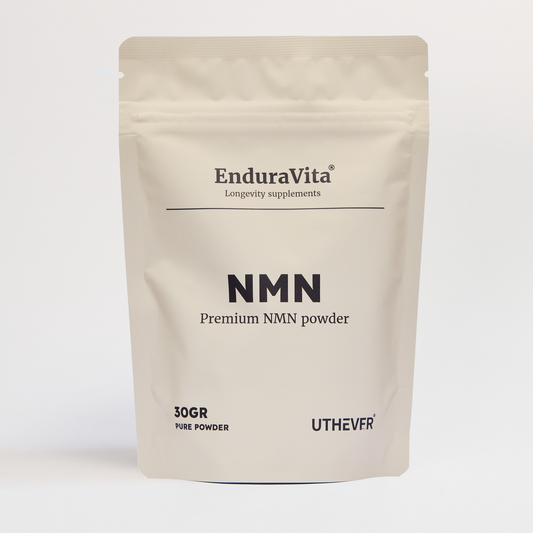
View our NMN powder form here:
View NMN pure powder
Liposomal liquids
Liposomal liquids are somewhat similar to the outer layer of your cells. As a result, they can be easily absorbed, and the nutrients remain more available to your body. This form is therefore often known for high bioavailability.
All in all, the form of a supplement is just as important as the content. If you want to buy NMN, pay attention not only to the dosage but also to the form that your body can best absorb.
Conclusion
Bioavailability is the key to the effectiveness of food and supplements. By consciously paying attention to the timing of intake, what you eat with it, and the form in which a supplement is made, you help your body absorb more. This way, you get more out of every choice you make for your health.
Do you want to ensure that your supplements are well absorbed? Then discover our carefully selected NMN products and support your cellular health with high-quality ingredients.
Sources:
¹ Tru Niagen Staff (2023). The True Meaning of Bioavailability. https://www.truniagen.com/blogs/tru-niagen-labs/the-tru-meaning-of-bioavailability